 boxgameh5.com
The Escapists 3: How Its New 3D Prison Sandbox Could Change the Art of the Escape
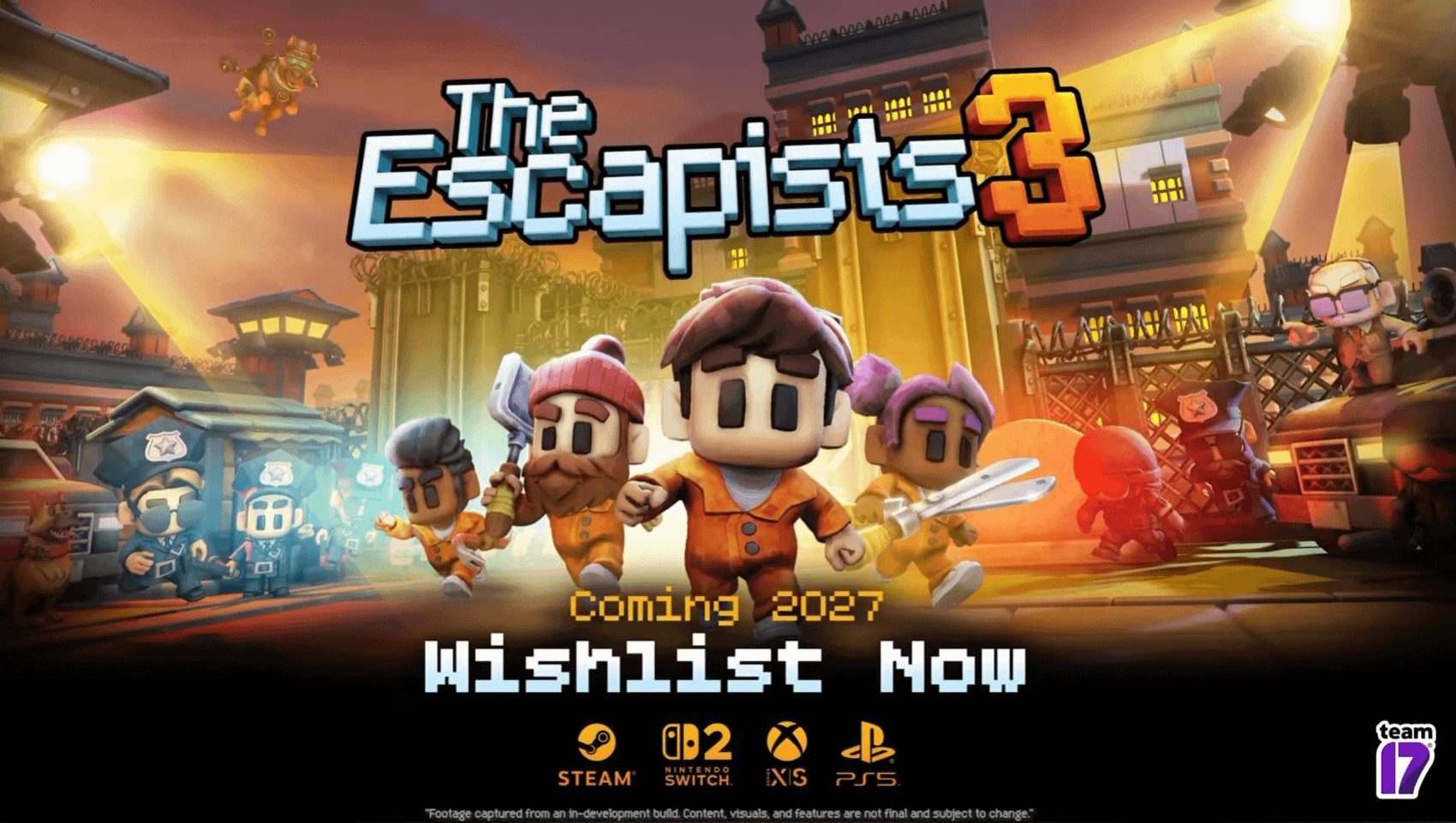
An escape begins long before a prisoner reaches a wall. It begins with an ordinary observation: a guard walking away, a corridor becoming quiet, or an everyday object suggesting an unexpected use. That moment—when a controlled environment starts to look like a collection of possibilities—is central to the appeal of The Escapists. The Escapists 3 is preparing to build a new game around that feeling, introducing a three-dimensional world while retaining the tension between following prison rules and quietly preparing to break them.
The most interesting subject surrounding this sequel is how its systems might connect. A prison escape becomes memorable when movement, routines, equipment, character abilities, and other players all influence the same plan. A larger environment alone cannot guarantee that experience. The real question is whether the new design will give players more meaningful ways to observe a problem, prepare a solution, and recover when something goes wrong.
This is a pre-release article, current as of October 23, 2026. Team17 has announced a 2027 release window, while Steam currently lists the precise release date as unannounced. The game is not yet available on Steam. Confirmed features are distinguished below from analysis of their potential; untested escape routes, crafting recipes, and performance claims are not presented as established facts.
1. The Announcement Establishes a Different Kind of Prison Escape
Understanding an Institution Before Challenging It
The Escapists 3 is an upcoming prison escape sandbox developed and published by Team17, with a move into 3D at the center of its presentation. Those facts establish the framework, but they do not fully explain the attraction. A prison sandbox is interesting because its setting has an intended purpose that directly opposes the player’s goal. Corridors organize movement, schedules organize time, and guards maintain restrictions. The player studies these arrangements while searching for opportunities within them. That creates a different relationship with a game world from simply traveling through a sequence of levels. A locked building becomes something to interpret. Repeated exposure can teach the player how the environment operates, making an apparently secure place feel gradually less impenetrable. The satisfaction comes from developing an understanding that the institution itself never intended the prisoner to acquire.
Why Preparation Gives the Final Attempt Meaning
The escape fantasy depends on a satisfying connection between preparation and action. Reaching freedom matters more when the player remembers the small decisions that made it possible. An item acquired earlier may become useful much later. A route that initially seemed irrelevant may provide a missing connection. A failed experiment may reveal a restriction that changes the entire plan. These are general principles of sandbox design rather than promises about particular missions in the sequel, but they explain why the setting is valuable. Prison life creates repeated encounters with familiar spaces, allowing understanding to develop before the decisive attempt. A short journey across an ordinary room can consequently become tense because the player knows what might interrupt it. The action itself may be simple; its significance comes from the preparations surrounding it and the consequences of choosing the wrong moment.
Freedom Needs Understandable Boundaries
A useful way to assess the sequel will be to ask whether its restrictions create decisions. There is a difference between a rule that blocks progress and a rule that makes progress interesting. An obstacle becomes productive when players can understand it, investigate it, and consider alternatives. A restriction becomes frustrating when its behavior appears arbitrary or essential information cannot reasonably be discovered. The Escapists 3 therefore faces a demanding balance. It needs enough structure to make an escape feel earned and enough flexibility to support different approaches. Too little resistance would make preparation unnecessary. Too much inflexibility would make experimentation feel pointless. The appeal of a prison sandbox rests on the relationship between these extremes. Players need to believe that the institution is powerful, while also believing that patient observation and creative decisions can expose weaknesses within it.
2. Entering a 3D Prison Changes How Players Read Space
From Recognizing a Layout to Understanding a Place
The transition to 3D matters because it can change the information players need to make decisions. A prison can communicate height, depth, overlapping routes, and physical relationships between objects. That does not automatically produce a more complicated or better game. It gives the designers another set of tools for presenting problems. Spatial understanding may become a larger part of preparation if players need to consider what lies above, below, or behind an apparent route. These possibilities are analysis of the format, rather than confirmation of specific camera behavior or detection rules. The important distinction is that three-dimensional space can support additional questions. Instead of asking only whether a passage connects two locations, players may also consider how those places relate physically and whether that relationship suggests an alternative approach. The environment can become an object of investigation in its own right.
The Promise of Physical Interaction
In Team17’s announcement Q&A, creative manager Matt Burnill describes a desire for tangible interactions, using the example of pushing a guard down stairs. That example communicates a design intention: players should sometimes be able to act on an ordinary physical idea and see the world respond plausibly. It does not establish that every object can move or every imagined interaction will work. Rather, it suggests an interest in making the prison feel less like a set of disconnected commands. The broader appeal comes from transferable understanding. If a player discovers a physical relationship in one situation, that knowledge can encourage experimentation elsewhere. The challenge is consistency. A world feels interactive when its responses follow recognizable patterns, even when those patterns are simplified. Without that consistency, an apparently flexible environment can become a guessing game about which possibilities the developers happened to implement.
Readability Will Matter as Much as Detail
The presentation will need to explain opportunities without making every solution obvious. A visually busy prison can look impressive while making relevant information difficult to identify. Conversely, an overly simplified environment might fail to communicate why particular actions work. The strongest balance would let players recognize important features, understand their immediate surroundings, and make informed guesses about unfamiliar situations. Camera control, object visibility, interface feedback, and environmental contrast could influence that balance, although their final implementation remains something to evaluate after release. This is especially important when observation forms part of the activity. Players should feel that careful attention improves their understanding. If success depends on noticing a useful detail, that detail must be reasonably perceivable. A strong 3D sandbox rewards looking closely while avoiding situations in which crucial information is obscured by the presentation.
3. Learning the Daily Routine Gives the Prison a Rhythm
Repetition Can Become Useful Information
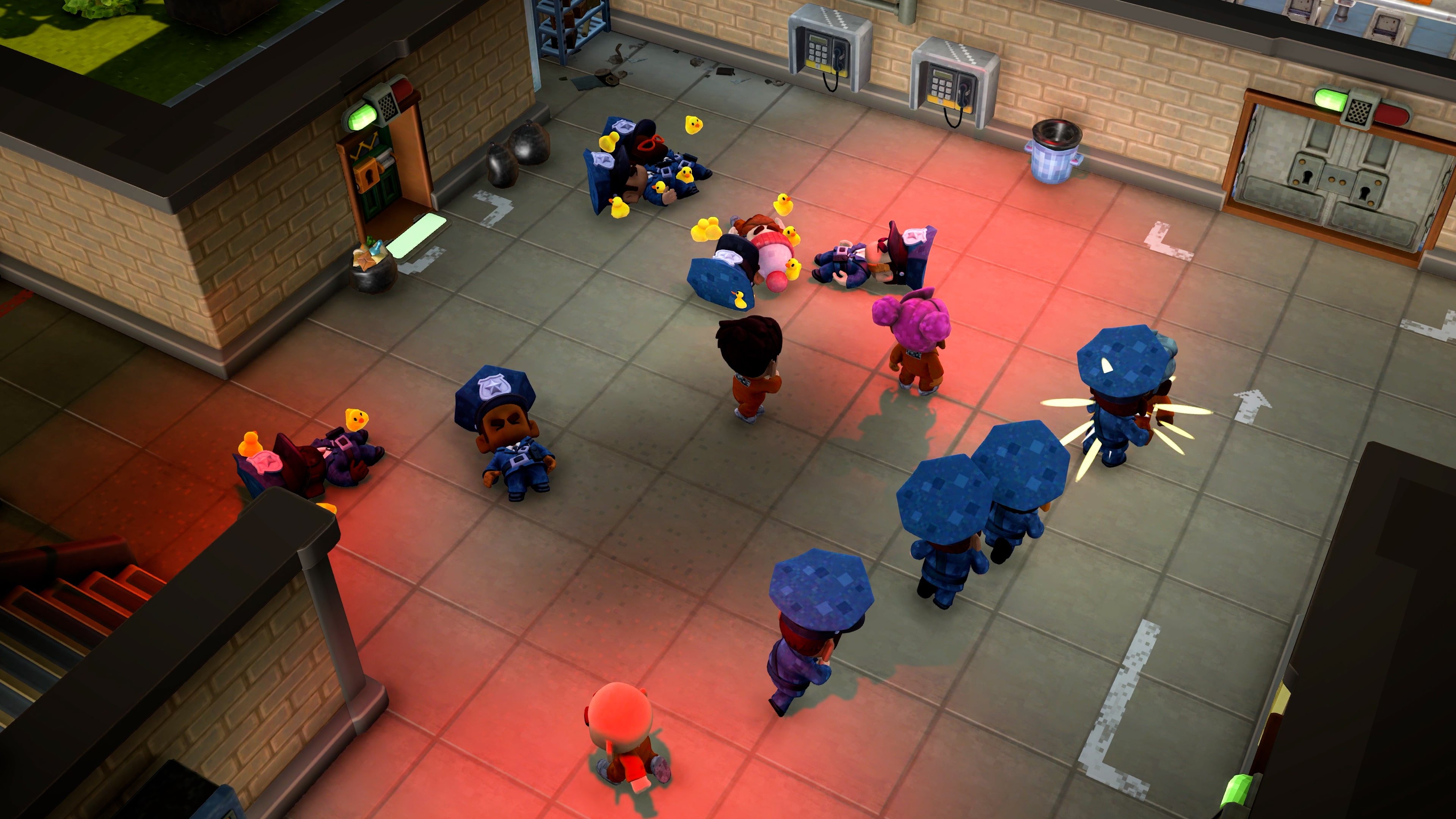
Daily routines are part of the announced design. Their importance extends beyond creating the atmosphere of organized prison life. Repetition provides a basis for comparison: once players recognize what normally happens, they can notice differences and imagine opportunities around the pattern. A schedule can make the same location feel different at different moments, even when its physical layout remains unchanged. This is one reason a confined setting can support depth. The environment does not need to expand constantly if time changes how its spaces function. However, the sequel’s exact schedules, attendance requirements, and penalties should not be assumed from earlier games. The confirmed point is the continuing importance of observing routine. The analytical question is how much meaningful variation that routine will create, and whether growing familiarity will give players increasingly useful ways to interpret ordinary events.
Two Goals Operating at the Same Time
Routine also gives players a believable reason to delay immediate action. The visible daily activity and the private escape objective can move forward at different speeds. A prisoner may appear to participate in ordinary life while mentally assembling a plan that will only become practical later. That overlap produces tension without requiring constant confrontation. It can also make patience feel active. Waiting becomes engaging when the player is observing, comparing, or choosing between competing opportunities. The danger is repetition without development. If familiar activities continue after players have learned everything useful from them, the routine can become a barrier between interesting decisions. A successful design would make repeated days feel progressively more understandable or manageable. The institution can remain structured while the player’s relationship with that structure changes. Familiarity should provide confidence, fresh questions, and new reasons to reconsider previously overlooked possibilities.
A Schedule Should Create Choices About Timing
The most productive use of a prison schedule would be to create tradeoffs. An opportunity available now might conflict with another worthwhile activity. A promising route might be convenient at one moment and awkward at another. These are hypothetical examples of how time can enrich a sandbox, not descriptions of confirmed encounters. Their value is that they encourage players to think in sequences rather than isolated actions. Getting somewhere is only one part of the problem; arriving under suitable circumstances can become equally important. Timing then functions as a resource alongside equipment and knowledge. This makes preparation more expressive because two players can understand the same prison and choose different moments to act. The routine system’s eventual quality will depend on whether it supports meaningful differences and provides enough information for deliberate decisions. Players should succeed because they recognized a pattern, rather than merely stumbling into a fortunate moment.
4. Acquiring Supplies Turns Everyday Life Into Preparation
Objects Become Valuable Through a Plan
Resource gathering is another announced element, with supplies obtained through activities such as searching, trading, and completing jobs. The significance of those activities depends on what players can do with the results. An object has limited strategic meaning in isolation; its importance comes from the possibilities it opens and the alternatives it displaces. A useful resource system can make players reconsider items they initially ignored because their needs have changed. That process suits the setting particularly well. Restricted access encourages attention to ordinary things, while the escape objective gives those things another identity. Something associated with everyday prison life may become part of a private plan. The exact economy has not been established through public play, so claims about optimal purchases, guaranteed resource locations, or reliable gathering strategies would be premature. Those details require evidence from the finished game.
Discovery Is More Interesting Than Accumulation Alone
Collecting supplies becomes engaging when it asks players to judge relevance. Possessing more objects does not necessarily produce better decisions. A stronger design creates reasons to care about what an item enables, when it becomes useful, and whether obtaining it is worth the effort. The appeal lies in connecting a resource to an intention: this matters because it supports an approach the player wants to attempt. That connection can create an effective learning process. An unfamiliar item prompts curiosity, a newly understood obstacle gives it context, and the combination produces an idea. The sequence feels personal because the player participates in making the connection. If every object is immediately assigned to an obvious task, the experience becomes procedural. If nothing is explained, experimentation can become directionless. A satisfying middle ground allows inference while providing enough feedback to build confidence and make future decisions more informed.
Activities Should Connect to the Wider World
Jobs and trading can matter for reasons beyond the quantity of supplies they produce. In a sandbox, an activity becomes especially valuable when it changes the player’s relationship with the environment. Access to a place, a new interaction, or a better understanding of another character can make an activity feel connected to the wider world. Whether The Escapists 3 uses its jobs in those particular ways remains unconfirmed, but this is a useful standard for assessing the resource systems. The important question is whether obtaining supplies feels like participating in prison life or repeatedly completing detached chores. A well-integrated activity can serve several purposes: sustaining the setting, teaching the player something, and contributing to an escape plan. That overlap would help preparation feel like part of the adventure. Players should ideally remain engaged with the prison while gathering what they need, rather than feeling that they are temporarily setting the interesting parts aside.
5. Crafting Can Connect Observation to Action
A Larger Catalog Does Not Automatically Mean Greater Depth
Crafting is part of the announced sandbox, but crafting becomes strategically interesting through relationships rather than volume alone. A large catalog can still feel narrow if most objects serve the same purpose or every obstacle points toward one compulsory answer. A smaller collection of versatile tools can support more decisions when their uses overlap in different ways. The key issue is what crafting allows players to express. Can they prepare for a preferred approach? Can they substitute one solution for another? Can they improvise after circumstances change? Those questions do not yet have verified answers for the sequel. They do explain why crafting deserves attention. It can become the bridge between understanding the prison and acting on that understanding, turning an observation into something the player can attempt. The quality of that bridge will depend on how clearly tools connect with environmental problems and how much room remains for alternatives.
A Recipe Can Represent a Commitment
Crafting introduces the possibility of commitment. If players use a resource for one purpose, that choice may affect what remains available for another. Whether the sequel creates strong or mild commitments through recipes is unknown, but the design principle matters. An object becomes meaningful when making it expresses a decision about the future. Players are no longer collecting possibilities; they are choosing which possibility to pursue. This can make preparation tense without requiring immediate danger. A player may feel confident about a route while remaining uncertain whether the equipment choice leaves enough flexibility. Another player may prefer a deliberately simple plan with fewer dependencies. Both approaches can be rewarding if the system supports understandable tradeoffs. Crafting works best when players can explain why they made something. The action then represents a considered decision, rather than an instruction followed simply because a checklist demanded a particular item.
Crafting Needs Depth Beyond Hidden Recipes
A challenge for any modern sandbox is what happens after its recipes become widely known. Discovering combinations can be enjoyable during early play, but information alone rarely sustains a crafting system indefinitely. Once players know what can be made, the game needs other sources of depth: deciding what is relevant, choosing when to commit resources, and adapting equipment to changing circumstances. This is where crafting can connect to routines, geography, and cooperation. Knowledge of a recipe might solve one question while leaving several practical ones unanswered. That allows experienced players to remain engaged without requiring the game to conceal basic information. The Escapists 3 will have stronger lasting appeal if preparation remains interesting after discovery. Familiarity should become a foundation for more creative decisions. Knowing how to make a tool is most satisfying when the world still offers interesting questions about where, when, and why to use it.

6. Character Skills Could Make Escape Planning More Personal
Progression Can Change Available Actions
Team17 has described a skill-tree system, with experience used to unlock abilities. The announcement gives Hinge Buster, an ability associated with breaking through a locked door, as one example. This illustration suggests progression can affect available actions rather than simply improving an invisible calculation. The distinction matters. A numerical increase can make a familiar activity more efficient, while a new action can change how players interpret an obstacle. A locked passage might become relevant to a character who previously had little reason to consider it. However, the published example does not establish the complete tree, its balance, or how restrictive its choices will be. Those details will determine whether progression supports different approaches or mainly provides a sequence of broadly desirable upgrades. For now, the confirmed direction is more informative than any speculative ranking of abilities or proposed character build.
Specialization Requires Useful Alternatives
Character development can give an escape plan a recognizable personality. One player may favor direct solutions, another may enjoy extensive preparation, and another may prefer adapting as opportunities appear. A skill system can support those preferences if different investments remain useful. The danger is a progression structure that looks diverse but pushes everyone toward the same essential choices. If one ability consistently bypasses important problems with little drawback, other options become difficult to justify. At the opposite extreme, severe specialization can discourage experimentation if players feel trapped by decisions made before they understood the game. The final balance is unknown, so recommending builds would be premature. A more useful question is whether skills will broaden decision-making while preserving viable alternatives. Progression should help players develop a style without making the rest of the sandbox feel inaccessible, and without reducing character development to finding one universally superior sequence of upgrades.
Player Knowledge and Character Growth Should Reinforce Each Other
There are two kinds of improvement in a game like this: the character gains capabilities, and the player becomes better at understanding situations. Their relationship will strongly influence the experience. If upgrades solve too much automatically, observation may become less important. If player knowledge solves everything while abilities add little, progression can feel decorative. A productive balance would let new skills suggest possibilities while leaving the player responsible for using them intelligently. An ability might make an approach conceivable without determining when it is sensible. This preserves the pleasure of learning the prison while giving character development a concrete role. It can also make repeated play interesting because familiarity and specialization may interact differently. The most satisfying progression changes the questions a player asks. A familiar obstacle can become worth reconsidering because the character now has another way to engage with it, even though timing and judgment still matter.
7. An Escape Plan Becomes Interesting When Its Parts Interact
Multiple Methods Need Meaningful Differences
The official description presents several approaches to escape, including digging, climbing, sneaking, fighting, and disguise. These establish a broad direction rather than verified route instructions. Variety becomes meaningful only when approaches create different decisions. If several methods lead through essentially identical sequences, their differences may remain cosmetic. A stronger sandbox gives each approach a distinct relationship with preparation, timing, access, and recovery. That does not require complete separation; overlap often makes improvisation possible. A player might begin with one intention and later combine elements from another. The important point is that alternatives should feel like different ways of understanding the prison. Their precise mechanics and limitations still need to be demonstrated through fuller gameplay information and public play. Until then, the range of announced approaches is best understood as a statement of design ambition, rather than evidence that every route will be equally flexible or practical.
Dependencies Create Satisfaction and Vulnerability
An escape plan can be understood as a set of dependencies. One action makes another possible, equipment supports a particular movement, and an opportunity allows the sequence to begin. This can make success satisfying because the player recognizes connections between decisions made at different times. It also creates vulnerability. A plan with many necessary steps may become fragile if one assumption fails. That fragility is not automatically a weakness; it can produce tension and encourage thoughtful preparation. However, the game needs to distinguish between players making risky choices and systems behaving unpredictably without explanation. Failure is easier to accept when players can identify what happened and imagine a useful adjustment. The quality of an escape sandbox therefore depends partly on how clearly it reveals relationships among obstacles. The final solution can remain open-ended while the underlying rules stay understandable enough to support deliberate planning.
Improvisation Depends on Prior Understanding
Satisfying improvisation usually rests on knowledge. Players need some understanding of what tools, spaces, and characters can do before a sudden alternative feels clever. Otherwise, the outcome can seem accidental. The sequel’s systems will need enough consistency for players to form expectations and enough flexibility for those expectations to combine in unexpected ways. This is demanding because individual mechanics must remain understandable while also interacting productively. A route interrupted halfway through can become memorable if the player identifies another possibility using previously acquired knowledge. The same interruption becomes frustrating if the only response is blind experimentation. The most exciting potential lies between preparation and surprise, where a plan gives direction without preventing a player from noticing a better opportunity. Ideally, mistakes would reveal something useful about the world, making even an unsuccessful attempt contribute to a growing understanding of what another escape might require.
8. Cooperative Play Changes the Shape of Preparation
More Players Mean More Moving Parts
The announced multiplayer options include two-player local split-screen and online cooperation for up to four players. Those formats create opportunities for shared escape stories, but they also change the planning problem. A solo player manages a single sequence of intentions. A group must coordinate several people’s understanding of that sequence, including what each person believes is ready and what should happen next. The result can be more expressive because players contribute different preferences and ideas. It can also be more chaotic because coordination introduces uncertainty. The appeal does not depend entirely on efficiency. A group may enjoy an unnecessarily complicated plan because everyone helped invent it. The design question is whether the game provides enough shared information for cooperation to feel deliberate while preserving the unpredictable moments that make playing with friends distinctive. The presence of multiplayer establishes the opportunity; its execution will determine the quality of the experience.
Everyone Needs a Meaningful Contribution
Role division can help a group organize itself, but a strong cooperative experience requires more than assigning one person the important job and asking everyone else to wait. Different tasks should connect to the same objective, and players should understand why their contributions matter. This is especially relevant in a preparation-heavy game, where activities may unfold at different speeds. If one player enjoys observing the environment and another prefers collecting equipment, both should ideally have worthwhile decisions to make. The final systems will determine how naturally that happens. It is too early to claim particular classes, shared inventory rules, or team-only routes. A grounded expectation is that cooperative depth will depend on interdependence. Players should help one another in ways that create an experience more interesting than completing unrelated tasks in the same location. A good group plan lets each participant recognize a personal contribution when the final attempt begins.
Communication Becomes Part of the Challenge
Cooperative tension often comes from incomplete communication. One person thinks the escape is beginning immediately, another is still preparing, and a third has discovered something that changes the plan. Such situations can be funny, frustrating, or both, depending on how the game supports recovery. A useful interface can reduce unnecessary confusion without removing the need to talk. Clear feedback and reliable information about significant events help a group distinguish an intentional risk from a misunderstanding. The implementation of these features remains unknown, but this is an important standard for evaluating multiplayer. Cooperation should give players reasons to coordinate without making them constantly compensate for missing information. When communication works well, a shared escape becomes a collective act of interpretation. Several people study the same institution, notice different opportunities, and attempt to combine their observations into one coherent sequence. Success then reflects both understanding the prison and understanding one another.
9. Getting Beyond the Wall Could Extend the Escape Story
The Perimeter May Become a Transition
One intriguing announced idea is that reaching the outside does not necessarily conclude the challenge. Team17’s description points toward environments beyond the prison perimeter, including forests, canyons, catacombs, and dangerous waters. The exact structure remains unclear: the announcement does not establish the length of these areas, their checkpoint rules, or whether every prison follows the same pattern. Even so, the idea changes how a breakout can be framed. A wall can become a transition between problems rather than the final boundary of a level. Preparation may consequently have a broader purpose because a successful first stage does not automatically secure the entire attempt. The dramatic promise is a longer journey between confinement and freedom. Whether that journey feels rewarding will depend on how closely the outside connects to decisions made before the prisoner leaves the institution, and whether the transition develops the original escape plan.
A New Setting Can Change the Source of Tension
Inside a prison, tension naturally comes from rules, restricted access, and supervision. Outside, the environment can create a different relationship with movement. The challenge might become less about appearing ordinary and more about reaching a destination through unfamiliar terrain. These are potential implications rather than confirmed objectives, but they illustrate why the external locations matter. A change in setting can refresh an attempt without discarding what made its preparation meaningful. The strongest version would connect the phases, allowing earlier decisions to remain relevant later. Equipment, knowledge, or abilities could provide continuity if the final design supports those interactions. A weaker version would make the outside feel like an unrelated sequence attached after the satisfying part. The distinction will depend on whether the transition develops the player’s choices or introduces a separate task with little connection to them. Continuity is particularly important when an escape has already required substantial planning and emotional investment.
Longer Escapes Need Proportionate Consequences
Extending an escape beyond the perimeter raises a question about failure. If players spend substantial time preparing and then fail late, the setback needs to feel informative and proportionate. This does not mean failure must be gentle. High stakes can make success memorable. However, players should understand what was at risk, why the attempt failed, and whether the next attempt can proceed differently. Checkpoints, recovery opportunities, and persistence could all affect that experience, although none should be assumed without confirmation. The design problem is preserving the emotional weight of escape without turning repetition into punishment. A longer sequence can produce a stronger story if each stage changes the situation meaningfully. It can also magnify frustration if players repeatedly redo solved preparation to reach the part they are still learning. The handling of this balance will be crucial to whether the journey beyond the wall feels like an exciting culmination or an unwelcome extension.
10. Lasting Appeal Will Depend on Meaningful Variation
Distinct Prisons Need More Than Different Scenery
The Escapists 3 has been announced with five prisons. That number gives a basic sense of scope, but it cannot establish how substantial or replayable the game will be. The more important question is whether each location encourages a different way of thinking. Distinct architecture can change movement, different routines can change timing, and different relationships between obstacles can change preparation. A location becomes memorable when its identity influences decisions. This does not require every prison to introduce an entirely new system. Familiar mechanics can become interesting when arranged under different constraints. A limited collection of tools can support many ideas if its elements combine in varied ways. The game’s lasting appeal will therefore depend on how effectively it recombines restrictions, spaces, opportunities, and abilities across its settings. Scope provides room for variety, but variety becomes valuable only when players can feel its effect on their plans.
Replayability Begins With Another Question
A sandbox earns replayability when finishing it leaves players curious. They may wonder whether another approach would work, whether a different ability would change preparation, or whether a group could coordinate a more ambitious attempt. That curiosity is more durable than repeating content simply to receive another reward. It grows when a game makes alternatives visible without demanding that players explore everything immediately. A successful escape should feel complete while leaving the impression that unused possibilities remain. This is especially important for an experience built around choice. If the first successful route reveals that most alternatives are impractical, the apparent breadth of the sandbox shrinks. If success clarifies only one approach among several convincing possibilities, mastery becomes an invitation to experiment. The eventual balance between those outcomes will matter more than any single promotional feature. Players return to systems when those systems continue to support questions worth investigating.
Conclusion: The Potential Lies in How Everything Connects
The Escapists 3 is most compelling as a proposal for connecting systems. Space affects observation, observation informs preparation, preparation shapes the attempt, and the attempt tests how well the player understands the world. The move into 3D, character development, cooperation, and environments beyond the walls offer ways to strengthen those connections. Their value will depend on how clearly they work together and how much freedom remains when players combine them in unexpected ways. For now, the game is an announced project with an appealing direction, rather than a finished experience whose routes and balance are already known. Its greatest opportunity is to make freedom feel like the result of accumulated understanding. If ordinary prison life can become useful knowledge, and that knowledge can support convincingly different escape stories, the sequel could give the series a meaningful new chapter built around observation, preparation, and the pleasure of testing an idea.