.webp)






Warhammer 40,000: Darktide stands apart from most co-op shooters because it is built on a razor’s edge: the marriage of melee brutality and ranged suppression. Few games attempt to make these two modes of combat equally important, and fewer still tie them to class identity, encounter pacing, psychological tension, and moment-to-moment survival. But Darktide is built exactly on that principle. This tension creates triumph when it works and enormous friction when any part falters.
This article focuses on a single, deeply complex issue in Darktide’s design: the long-running struggle to balance melee and ranged combat without undermining the fantasy of each class, the pacing of missions, or the integrity of the 40K universe. By examining the game chronologically—from the early prerelease philosophy to the live-service refinements—we can understand why hybrid combat is so difficult to perfect and why Darktide remains one of the most ambitious cooperative action titles ever made.
The Early Vision of Psychological Pressure and Role Interdependence
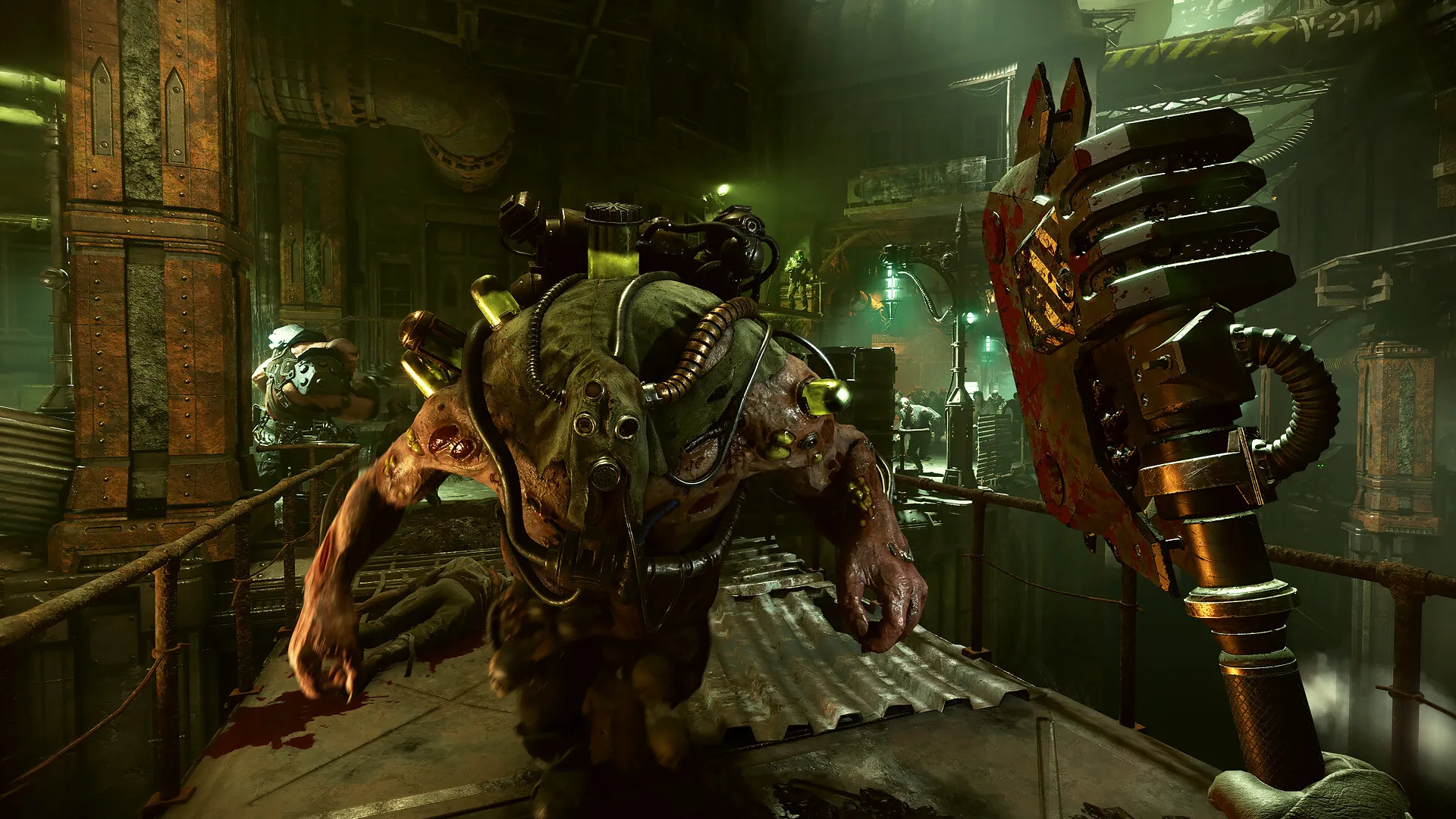
Darktide began with one core idea: players should never feel fully safe. The grim darkness of 40K is built around dread, and Fatshark wanted melee and ranged combat to represent two forms of pressure. Melee was meant to overwhelm players emotionally with proximity and chaos. Ranged was meant to create territorial threat, forcing players to move, use cover, and reposition as a team.
This vision required every class to feel incomplete without others. The Veteran was supposed to carve safe corridors with precision fire. The Zealot was meant to crash into melee lines and break enemy formations. The Psyker was the wildcard, erasing elite threats before they could distort the battle. The Ogryn was the wall holding everything together.
The design problem? These interlocking roles depend on extremely delicate tuning. If ranged enemies become too accurate, melee collapses. If melee gets too dominant, ranged players feel irrelevant. Early Darktide wrestled with this constantly, setting the stage for years of ongoing refinement.
Early Game Launch Struggles and the First Melee-Ranged Mismatch
At release, ranged enemies had near-pinpoint accuracy across impossible distances. Dregs and Scabs could shred players before they even entered melee range, making Zealots and Ogryns feel like they were running uphill through gunfire. Meanwhile, Veterans felt forced into a form of cover shooter gameplay that contradicted the kinetic co-op flow Fatshark was known for.
On the melee side, cleave values, stamina economy, and dodge limits were tuned with Vermintide’s DNA but placed into a world where bullets ruled. The problem was clear: the fantasy of melee supremacy was inherited, but the threat of ranged dominance was new. This mismatch created an identity crisis in Darktide’s combat system.
Players complained not because ranged enemies existed—but because melee didn’t feel like a viable answer to them. The hybrid balance leaned too far toward suppression rather than empowerment, and the early game loop reflected that frustration.
The Turning Point: Fatshark’s Rebalance Philosophy Emerges
Fatshark responded with a massive reconsideration of how enemies should behave. Ranged units received stagger adjustments, aiming delays, and reduced hit accuracy at long distances. Melee received buffs to cleave, weapons received refined attack patterns, and stamina became a more reliable resource across the board.
This rebalancing period is crucial because it established Fatshark’s long-term philosophy: hybrid combat must feel like a negotiation, not a punishment. Ranged units must be dangerous but readable. Melee must be powerful but not effortless. The entire game’s pacing depends on the balance between approach and engagement.
For the first time, players started to feel the intended power fantasy. The Zealot could dash through fire and meaningfully survive. The Ogryn could break firing lines instead of becoming a bullet sponge. Veterans still held dominion over ranged supremacy, but they weren’t forced to carry every engagement. The hybrid loop was beginning to mature.
The Weapon Ecosystem: A Constant Source of Tension, Innovation, and Chaos
One of Darktide’s boldest design decisions is that no weapon stands alone; each has strengths and weaknesses that interact with hybrid combat differently.
H3: How Melee Weapons Complicate Hybrid Balance
Fatshark built a melee ecosystem where cleave, penetration, mobility, and control vary wildly between weapon types. A chainaxe dominates armored elites but struggles in hordes. A power sword excels in sweeping control but falters in stagger. Every melee weapon pushes the hybrid system in a different direction.
H3: How Ranged Weapons Create Counter-Pressure
Plasma guns obliterate elite threats but punish overuse with heat. Auto guns require tight ammo management. Lasguns offer precision but low stopping power. Players who bring the wrong tool for the wrong mission amplify hybrid imbalance.
The weapon ecosystem gives Darktide depth, but also unpredictability. Every new weapon introduced—or even rebalanced—can distort melee-ranged harmony until corrected.
The Psyker: A Case Study in Class Identity and Hybrid Contradictions
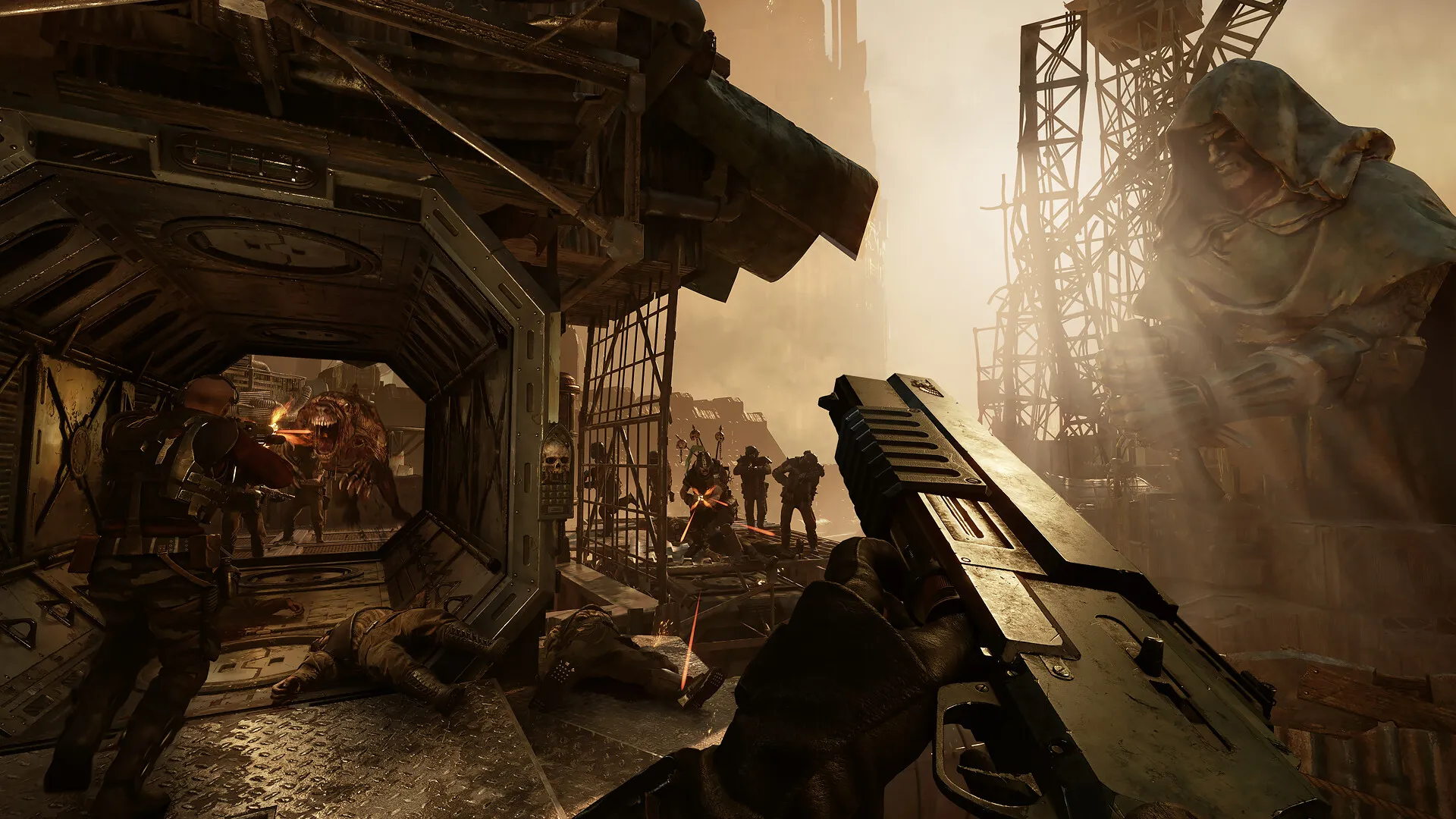
The Psyker is the ultimate example of how hybrid combat is difficult to balance. Its design relies on peril management, brain burst timing, crowd control, and ranged elite deletion. But any shift in ranged or melee threat immediately alters the Psyker’s viability.
When melee enemies gain too much stagger resistance, Psykers lose space to cast. When ranged enemies become too punishing, Psykers are forced into cover, reducing their effectiveness. When Veterans receive stronger ranged dominance, Psykers feel overshadowed.
H4: The Emotional Impact
Players often frame Psyker balance complaints not around numbers, but around fantasy. The class should feel like psychic terror incarnate. Any imbalance that interrupts this fantasy—whether too much safety or too little—breaks immersion more than any other class.
The Ogryn’s Struggle: Living Shield or Battlefield Controller?
The Ogryn exemplifies Darktide’s most difficult hybrid design challenge: making a giant melee tank viable in a world full of ranged weapons. Early in the game’s life, the Ogryn felt punished for being large because bullets hit them more easily.
Fatshark’s later rebalancing gave the Ogryn tools that shift their role from passive bullet magnet to active front-line disruptor. With improved stagger, better crowd control weapons, and more viable ranged options, the class now fits the intended fantasy.
But the design challenge remains: the bigger the Ogryn’s frame, the harder it is to maintain melee-ranged parity. Small mechanical adjustments ripple through the entire combat ecosystem.
Encounter Design: How Enemy Compositions Shape Hybrid Identity
Another major element of Darktide’s hybrid challenge is its procedural encounter mixing. Missions aren't handcrafted in the Vermintide style; they are designed to generate layered threats dynamically.
A few examples show the delicate tuning required:
• Too many ranged units distort mission flow into slow, cover-based play
• Too many melee elites erase the purpose of ranged classes
• Too many specials overwhelm the Psyker and Veteran simultaneously
Enemy compositions define the pace of hybrid balance more than weapon tuning ever could. This is the silent backbone of every good or bad run.
Mission Flow and Terrain: When Level Design Supports or Undermines Hybrid Combat
Hybrid combat depends heavily on space. Tight corridors give melee an edge but punish ranged classes. Open areas let Veterans rule but expose melee fighters. Vertical spaces change firing angles. Multi-level arenas split aggro.
Darktide’s most successful missions—like Consignment Yard or Chasm Logistratum—provide balanced geography that rewards both combat types. Meanwhile, extremely open or extremely tight layouts can tip hybrid combat into frustration.
Level design is therefore not optional; it is the third leg of Darktide’s balance triangle alongside weapons and enemy behavior.
Recent Patches and the Current State of Hybrid Combat
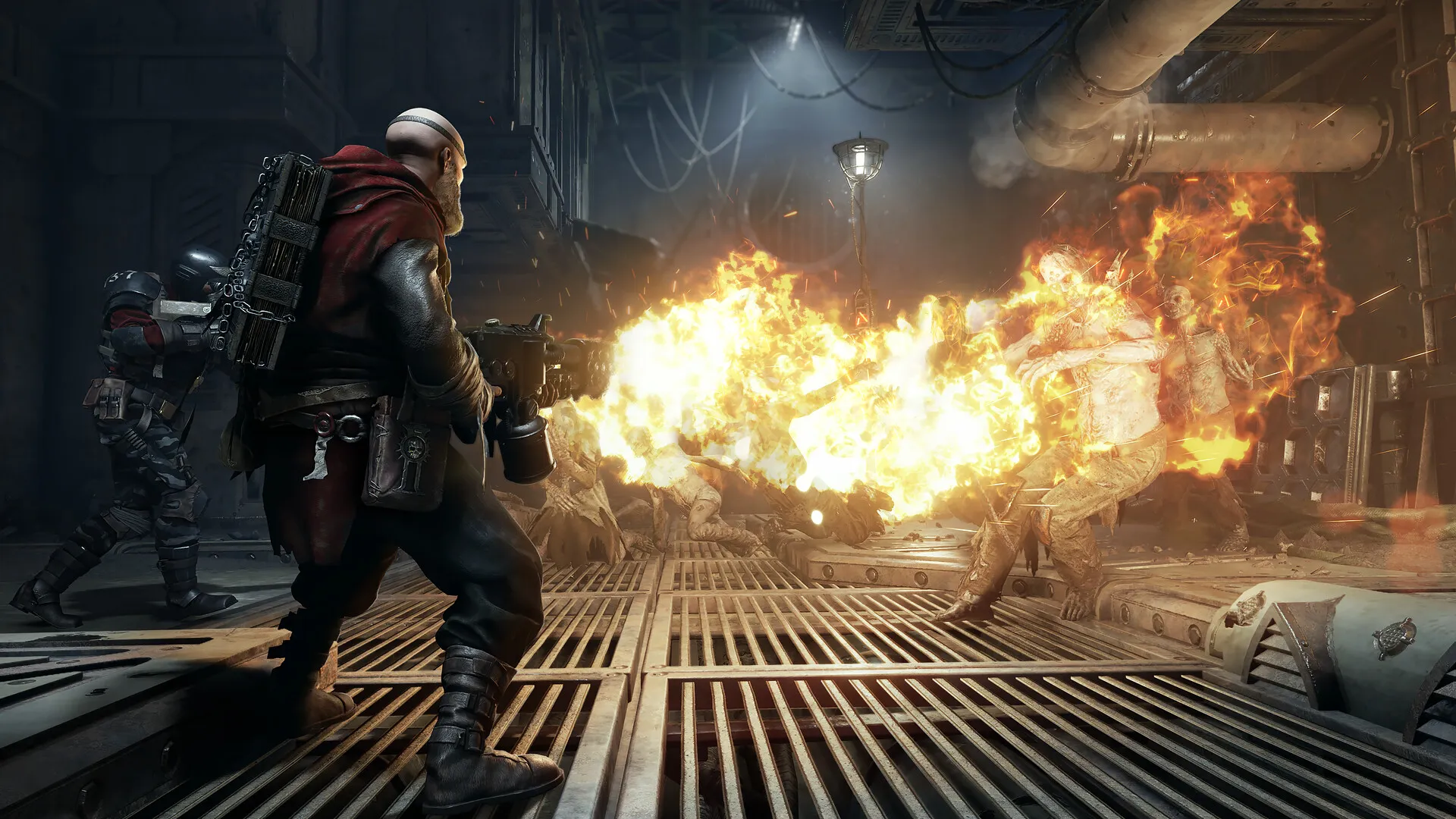
Darktide’s ongoing updates show Fatshark’s evolving understanding of hybrid balance. Weapon blessings, class talent trees, stagger adjustments, and enemy AI refinements all demonstrate an active pursuit of equilibrium.
Today, melee feels viable and satisfying, especially for Zealots and Ogryns. Ranged remains essential for elite deletion and suppressive control. Psykers occupy their intended niche more consistently. Veterans are strong without being oppressive.
The hybrid combat system will never be perfect—because perfection would require freezing the game’s evolution. But Darktide’s current state reflects the closest Fatshark has come to realizing its initial vision.
Conclusion
Warhammer 40,000: Darktide’s melee-ranged hybrid balance is not just a tuning challenge; it is the central pillar of the entire game’s identity. Every class, weapon, mission, enemy type, and progression system reflects this underlying tension. When hybrid combat is balanced, Darktide becomes one of the most exhilarating cooperative experiences in modern gaming. When it falters, the entire game feels unstable.
This delicate equilibrium is what makes Darktide fascinating. It is a living experiment in merging two fundamentally different combat philosophies into one seamless experience. Over time, Fatshark has refined this balance into something durable, dynamic, and deeply rewarding. But the journey itself—filled with redesigns, rebalances, and reinvention—is what makes Darktide truly unique in the gaming landscape.