.webp)



Introduction
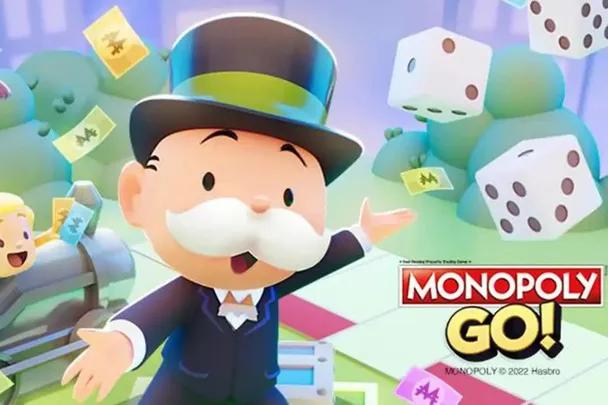
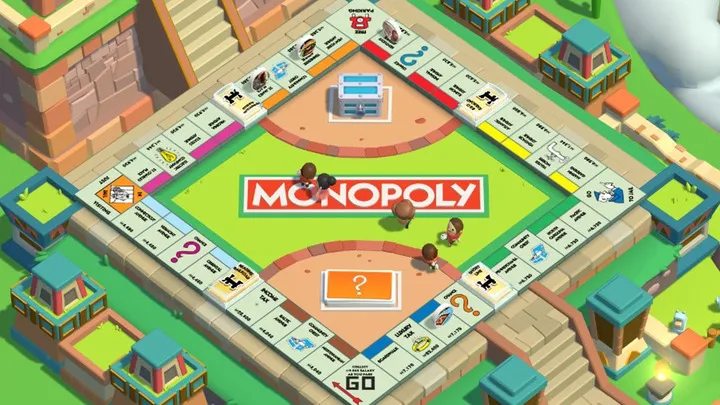
Monopoly GO! reimagines the traditional board game Monopoly as a fast-paced mobile experience centered on rewards, progression, and social interaction. Developed by Scopely, the game shifts away from long-form strategy sessions and instead builds a loop of dice rolling, property upgrading, and event-driven progression.
Rather than replicating the slow, negotiation-heavy gameplay of the original board game, Monopoly GO! transforms the experience into a reward economy system. Players are constantly earning coins, completing sticker albums, attacking other players’ boards, and participating in limited-time events. This evolution reflects a broader trend in mobile gaming: turning familiar concepts into highly engaging, repeatable progression loops.
1. From Board Game to Mobile Loop
The original Monopoly is about long sessions, negotiation, and gradual control of property.
Monopoly GO! compresses this into short, repeatable actions.
Core Loop Transformation
- Roll dice → move on board
- Earn money or trigger events
- Upgrade landmarks
- Progress to new boards
Each cycle takes only seconds, making the game ideal for mobile play.
Instant Feedback Design
Unlike the original game, progress is constant and immediate, keeping players engaged.
2. Dice Rolls as the Core Resource
Dice are the central mechanic of Monopoly GO!.
Every action begins with a roll, and the number of dice you have determines how much you can play.
Dice System Features
- Limited dice that regenerate over time
- Multipliers that increase rewards
- Strategic timing for rolls
Dice effectively function as energy, controlling session length.
Risk and Reward
Using higher multipliers can lead to huge rewards—but also faster resource depletion.
3. The Board System and Rapid Progression
Instead of one static board, the game features multiple themed boards.
Players progress through boards by upgrading all landmarks.
Board Progression
- Complete all upgrades on a board
- Unlock a new themed map
- Increase reward scaling
Each board introduces new visuals but keeps the same core mechanics.
Visual Motivation
Changing environments keeps progression feeling fresh despite repetitive mechanics.
4. Landmarks and Upgrade Economy
Instead of buying properties, players invest in landmarks.
These act as progression checkpoints.
Landmark Features
- Multiple upgrade levels
- Increasing cost per level
- Visual transformation after upgrades
Upgrading landmarks is essential for advancing to the next board.
Economic Scaling
Costs increase rapidly, requiring players to earn larger amounts of money over time.
5. Social Interaction: Attacks and Heists
One of the biggest differences from traditional Monopoly is player interaction.
Players can directly interfere with each other’s progress.
Social Mechanics
- Shutdowns – damage another player’s landmark
- Bank Heists – steal coins from others
- Shields – protect your board
These features create a competitive environment.
Emotional Engagement
Attacks introduce tension and unpredictability, making progress feel less isolated.
6. Sticker Albums and Collection Systems
A major long-term goal in Monopoly GO! is completing sticker albums.
Stickers are collected through gameplay and events.
Sticker Features
- Multiple themed albums
- Rare and ultra-rare stickers
- Tradeable duplicates
- Completion rewards
Completing sets grants significant bonuses, including dice and currency.
Collection Motivation
The randomness of sticker packs keeps players engaged over long periods.
7. Events and Limited-Time Modes
Events are a core part of the game’s retention strategy.
They introduce temporary goals and rewards.
Event Types
- Tournament leaderboards
- Milestone reward tracks
- Partner events
- Seasonal challenges
These events often provide the best rewards in the game.
Urgency and Engagement
Limited-time availability encourages players to log in frequently.
8. Multipliers and Strategic Rolling
Players can choose to roll with multipliers to increase rewards.
This adds a layer of decision-making to an otherwise simple mechanic.
Multiplier Effects
- Higher rewards from tiles
- Faster progression
- Increased event scoring
However, multipliers also consume more dice.
Strategic Timing
Players often save dice for events where multipliers provide maximum benefit.
9. Monetization and Reward Design
Like many mobile games, Monopoly GO! includes in-app purchases.
However, it balances monetization with free progression.
Monetization Elements
- Dice packs
- Sticker bundles
- Limited-time offers
Players can progress without spending, but purchases accelerate growth.
Reward Psychology
Frequent rewards and near-completion states encourage continued play.

10. Why Monopoly GO! Became a Massive Hit
Monopoly GO! quickly became one of the most successful mobile games globally.
Its success comes from combining familiar branding with modern design.
Key Success Factors
- Simple and addictive gameplay
- Strong social interaction
- Frequent events and updates
- Collection-based progression
These elements create a loop that is easy to start but hard to leave.
Reinventing a Classic
The game proves that even traditional board games can evolve into modern live-service experiences.
Conclusion
Monopoly GO! transforms the classic Monopoly formula into a fast-paced mobile experience built around rewards, progression, and social interaction. By replacing slow negotiations with quick dice rolls, dynamic events, and competitive mechanics like shutdowns and heists, the game creates a highly engaging loop that keeps players returning daily. The addition of sticker collections, multipliers, and limited-time events adds depth to an otherwise simple system, while monetization and reward design ensure long-term retention. Ultimately, Monopoly GO! demonstrates how a traditional board game can be successfully adapted into a modern mobile ecosystem driven by constant progression and social competition.